
Still Here on Jamaica Ave
Tomorrow I turn 36. I opened this store at 33. A letter from the owner of Silk Road NYC on the MRTA, CAURD, and what social equity looks like on Jamaica Ave in 2026.
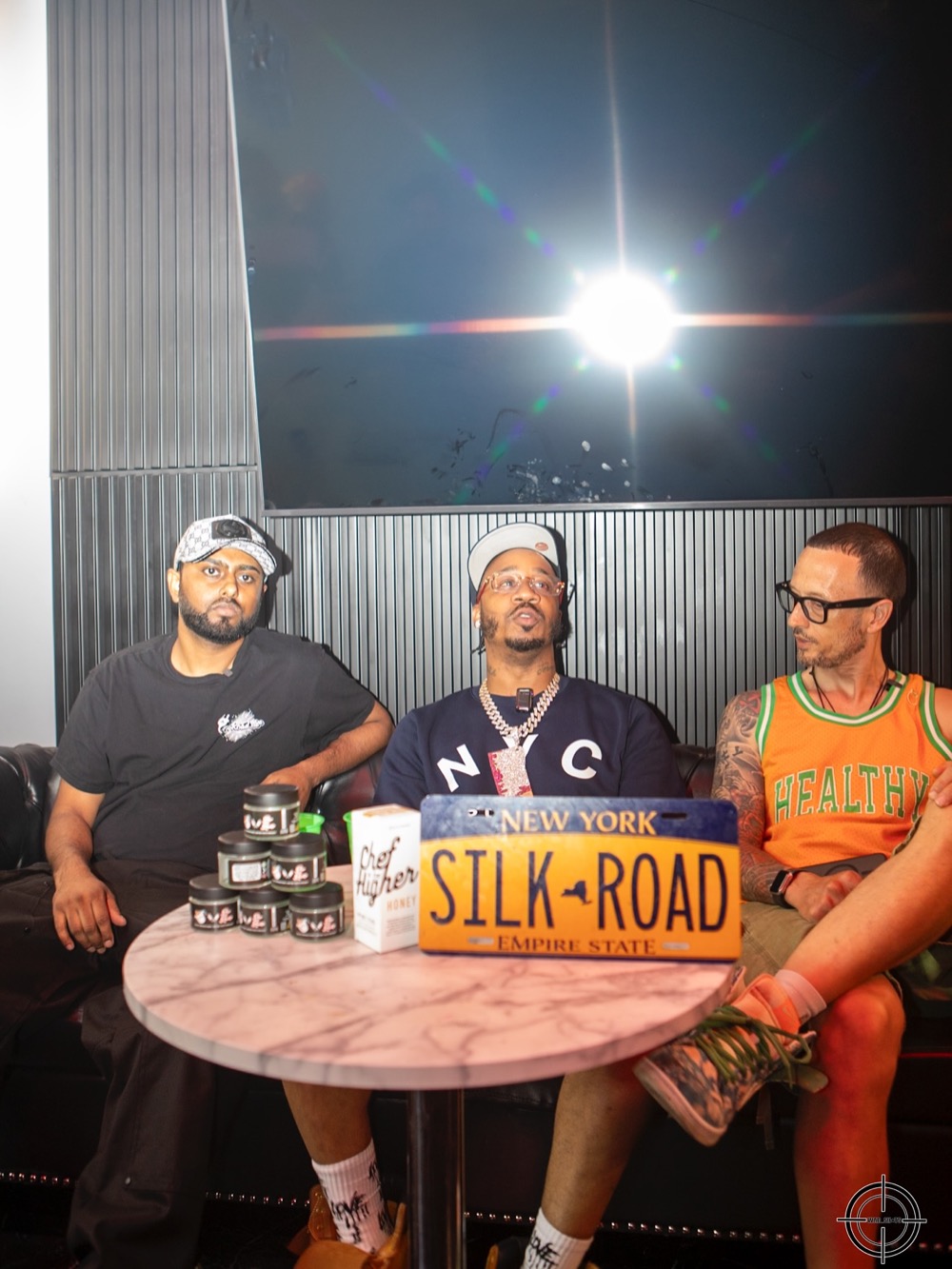
Tomorrow, Tuesday, November 3, I turn 36.
I opened this store at 33. Almost three years later, through every challenge and every setback this market has thrown at us, we're still here on Jamaica Ave, a licensed cannabis dispensary in Jamaica, Queens. I'm proud of that. I'm spending my birthday where I spend most days: in the shop, running a UFC and FIFA game night tournament with the people who kept us open.
Before I do, I want to put some things on the record. A lot of you ask me some version of the same question at the counter: are you good?
Here's the long answer.
Where I come from
I was born in Dhaka. (I told the longer version of that story here.) Clay walls, a straw roof, and in monsoon season the water came up past the door. Going to buy rice meant getting in a boat. Nobody called it hardship. It was just how everybody lived.
I came to Queens at five and grew up off Hillside Ave, not far from where the store sits now. My parents worked long hours. I was outside. Like a lot of kids on those blocks, I knew about cannabis long before I knew anything about licenses, and I was stopped and searched on the street more times than I can count.
I caught a case in the same neighborhood I operate in today. I'm not hiding it. I earned my license by catching a felony for this plant.
What the law promised
On March 31, 2021, New York signed the Marihuana Regulation and Taxation Act, the MRTA, into law. It legalized adult-use cannabis for people 21 and over. It also put a promise in writing: a goal of awarding 50 percent of adult-use licenses to social and economic equity applicants.
Who counts as social and economic equity? The law names people from communities disproportionately impacted, minority- and women-owned businesses, distressed farmers and service-disabled veterans.
"Communities disproportionately impacted," or CDI, has a specific meaning. It's the law's term for places with a history of arrests, convictions and other enforcement of cannabis prohibition that ran out of line with the rest of the state. Neighborhoods like mine. Blocks where kids got searched for what now sits legally on a licensed shelf.
"Justice-involved," or justice-impacted, is the state's term for someone convicted of a marihuana-related offense in New York before March 31, 2021, the day the old cannabis article of the Penal Law was repealed. It also covers someone whose parent, legal guardian, child, spouse or dependent had that conviction.
Then the state did something I still believe was right. It reserved the first retail licenses for those people. That license is CAURD: Conditional Adult-Use Retail Dispensary. To qualify, you needed two things.
First, the conviction, yours or a qualifying family member's.
Second, proof you could run a business. The justice-involved person had to have owned at least 10 percent of, and controlled, a business that turned a profit for at least two years.
In plain words: you paid for prohibition, and you know how to keep the lights on. The first stores were meant for those people.
I qualified on both. (QNS covered our opening as "from legacy to legal.") On February 23, 2024, we opened Silk Road NYC at 166-30 Jamaica Ave under license OCM-CAURD-24-000062, held by NYSE3AU-RETAIL INC. DBA Silk Road NYC. That number is posted by the door, and you can look us up on the state's dispensary location verification list or the Buy Legal map.
I've been called the poster child for the MRTA and social equity. I'll take it. I just want the poster still hanging on this wall five years from now.
The tier I never got
Here's something most of our customers don't know. The license I really wanted was the microbusiness tier, the small license that lets one operator grow, make and sell their own product.
I never even got the chance to get on the micro tier because of how bottlenecked they made this rollout. The state put conditional retail first. The first CAURD licenses went out in November 2022. The general application window that included microbusiness didn't open until October 2023, and the first microbusiness licenses weren't approved until February 2024. That's the same month we opened these doors.
So I never got to choose the license tier I wanted. Instead, they flooded retail and squeezed the margins.
Plastic knives
Here's what flooded looks like.
By my count of the state's own license data, as of this week Queens has 81 licensed adult-use dispensaries open to the public. More than 30 more hold active licenses and haven't opened yet. Queens has about 1.81 million adults 21 and over.
That's roughly 4.5 open stores for every 100,000 adults. Once the licensed stores that aren't open yet open their doors, it's over 6.
My rule of thumb, and plenty of operators I talk to say the same: no more than about 2 per 100,000 if you want stores to actually prosper. Queens is already more than double that, and still climbing.
The state approves every one of those licenses. It knows exactly how many it's putting into one borough. It kept going anyway. Call it commerce. Call it retailers' rights. From where I stand, it's a slap in the face to the justice-impacted people whose arrests and convictions are the reason legalization happened at all.
They promised us a fair market, but instead they threw us into a cage match.
I didn't survive the War on Drugs and transition to the legal market just to be a corner boy again, knife-fighting every other corner boy with the exact same plastic knives the state handed us.
That's the part that hurts. Not competition. Competition is fine. It's being set up to fight each other over the same blocks, with the same tools, while the margins dry up for everybody.
Down the avenue
There's one more thing I have to say, because I walk past it every day.
The state, through DASNY, the Dormitory Authority of the State of New York, backs the Social Equity Cannabis Investment Fund. The fund was seeded with $50 million in state funds, with a plan to bring in up to $150 million more from private investors. Through it, the state found locations, secured them and built them out into turnkey dispensaries for some CAURD licensees. One of those state-backed storefronts sits down the avenue from us.
To be fair and accurate: licensees in that program repay the fund's investment over time and, from what's been reported, pay rent. It isn't a free ride. And this isn't about the people running it. I wish every licensee well.
This is about the state. The state put its agency, its money and its weight behind finding and building some stores. Operators like me found our own space, signed our own lease and built our own store, while paying our taxes, our own rent and every bill on time.
Where is the justice and equality in that unfairness?
What independent means here
It means there is no corporate money behind this store. No investor group, no parent company in another state, nobody upstairs I have to call before I make a decision. Others came in with private money. I came in with my record, my business experience and my name.
It also means no favors. I don't owe anybody. That road is slower, and sometimes it costs more. But when I say something about this store, it's my word. My word is the only thing I've ever really had.
The room
Silk Road isn't just a counter. It's an event space and a concentrate education lounge. You might walk in on a chess game. You might walk into a Tekken tournament. Some nights it's game night, some nights it's karaoke or a paint session. On education nights we break down what concentrates are, how they're made, and how to read a label and a lab report, so you can make an informed choice.
Tomorrow night, Tuesday, November 3, it's the UFC and FIFA game night tournament. It's also my birthday. Come through. All events are 21+, with ID checked at the door, every time.
Jamaica Ave is one of the most mixed streets in New York. Bengali families, Caribbean families, Black families who have been in Southeast Queens for generations, Latino, Guyanese, Punjabi, every faith and no faith at all. The counter doesn't care how you pray or where your parents were born. Neither do I.
This year MD Hossain came through the shop. He's the one known for the line "my mayor's Muslim, my bagel's Jewish." It made me laugh the first time I heard it, because it's just Queens. Different people, same block, same train, same deli line. That's the city I grew up in. That's the room I want to run.
What I want from Washington
This part is my opinion. Washington keeps talking about moving cannabis to Schedule III. I don't want rescheduling. I want full federal descheduling. From where I stand, Schedule III is built for big pharma and multi-state operators, not for the people who were arrested for this plant and are trying to build something legal with it.
What it's about now
Here's my bottom line, and it's the reason I wrote any of this.
Justice-involved. CDI. Social equity. The qualifying terms that built this market matter less every year. Now it's about who owns and controls the location, and who has the money to outlast everybody else. That's how people get beat out of a market they shaped, a market that was meant for them.
I'm not walking away from it.
Come by
Come play on a Tuesday. Bring a friend who has never been inside a licensed dispensary and let them ask every question they've got. Ask me about the license on the wall. If I'm there, say what's up. I probably am.
We are determined to stay open and secure the generational wealth that was promised to our culture.
Thank you for riding with us. See you tomorrow night.
— Sohan Bashar Owner, Silk Road NYC 166-30 Jamaica Ave, Jamaica, Queens, NY 11432 License OCM-CAURD-24-000062
FAQ
Who owns Silk Road NYC?
Sohan Bashar. He was born in Dhaka, grew up in Jamaica, Queens, and is the sole owner. He opened Silk Road NYC at 166-30 Jamaica Ave on February 23, 2024, under CAURD license OCM-CAURD-24-000062. There is no investor group or chain behind the store.
What is CAURD?
CAURD stands for Conditional Adult-Use Retail Dispensary. It was New York's first adult-use retail license. To qualify, an applicant needed a marihuana-related conviction in New York before March 31, 2021, either their own or a parent's, legal guardian's, child's, spouse's or dependent's, plus at least two years of owning at least 10 percent of, and controlling, a profitable business.
What does justice-involved mean?
In New York's cannabis program, a justice-involved (or justice-impacted) person is someone convicted of a marihuana-related offense in New York before March 31, 2021, or whose parent, legal guardian, child, spouse or dependent was. It is the core eligibility test for a CAURD license.
What is the MRTA's social and economic equity goal?
The Marihuana Regulation and Taxation Act, signed March 31, 2021, set a goal of awarding 50 percent of adult-use licenses to social and economic equity applicants. That group includes people from communities disproportionately impacted (CDI), meaning areas with a history of disproportionate cannabis arrests, convictions and enforcement, as well as minority- and women-owned businesses, distressed farmers and service-disabled veterans.
What happens at Silk Road NYC besides the shop?
Silk Road NYC is also an event space and concentrate education lounge. You might find a chess game, a Tekken tournament, game nights, karaoke or paint sessions, plus education nights on how concentrates are made and how to read a label and lab report. All events are 21+, and ID is checked at the door. The current calendar is on the [events page](/events/).